GREEN SKILLS: STORY, LAND, AND PLAY


Developed by writer and researcher Jamie Rhodes at UCL, the project sits at the intersection of practice-based PhD research, environmental humanities, and interactive storytelling. It investigates how different cultural, ecological, and spiritual orientations shape not only how we live within landscapes, but how we imagine them. At its centre is the creation of a tabletop role-playing game (TTRPG) story world, developed through fieldwork with tribal women leaders and their role in community resilience in the Western Ghats, India.
Green Skills unfolds across contrasting environments that frame different relationships with land and survival.
In the Welsh mountains, participation in Wilderness First Responder training reflects an approach shaped by risk awareness, emergency response, and technical skill. Here, landscape is often encountered as something to navigate, manage, and endure. The emphasis falls on preparedness, resilience, and the capacity to respond to rupture.
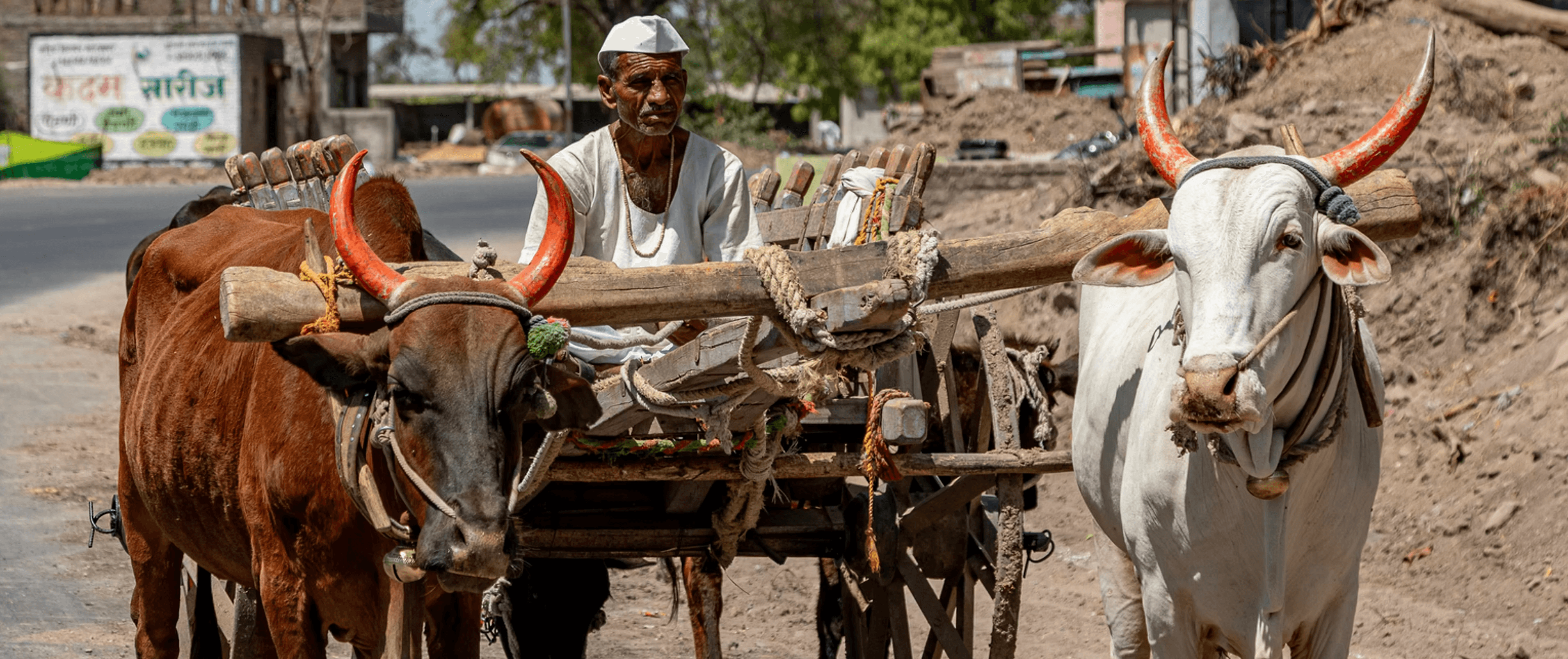
In the Western Ghats, India, the project engages with tribal women's leadership in communities whose knowledge is embedded in sustainable agriculture, forest ecosystems, and cooperative labour practices. In this context, land is not an external challenge but a continuous presence, something lived within rather than overcome. Knowledge is accumulated through repetition, care, and long-term relationship rather than isolated encounters.
The project does not attempt to resolve or simplify these differences. Instead, it moves between them, allowing contrasts in ecological perception, environmental knowledge, and cultural practice to remain visible. Through this movement, it becomes possible to ask how different ways of living with land shape experience of one's own relationship to the land.
Rather than treating story as something invented in isolation, the project approaches it as something encountered through attention, labour, and participation. It asks how embodied experience, indigenous knowledge, and ecological relationships give rise to forms of story that cannot be fully accessed through abstract thinking alone.
At its simplest, the project asks:
How does the land become what it is, depending on how we learn to live with it?
PHILOSOPHICAL FRAMEWORK
The project is grounded in a combination of phenomenology, new materialism, and creative writing practice.
Phenomenology, particularly the work of Merleau-Ponty, informs an understanding of perception as embodied and situated. Knowledge is not detached observation but something that arises through the body’s engagement with the world.
New materialist approaches, including those of Barad, Bennett, and Haraway, challenge human-centred perspectives by recognising the agency of nonhuman systems. Land, animals, and materials are not passive backdrops but active participants in the formation of experience.
Green Skills explores how different ecological and cultural contexts give rise to different kinds of story. It asks how environmental knowledge, indigenous practice, and embodied perception shape the possibilities of storytelling itself
THE DOCUMENTARY
A documentary film accompanies the project as a parallel creative and research output.
The film is not designed as an explanatory account of the work. Instead, it follows the process through which the story world emerges, tracing moments of labour, attention, and encounter. It observes rather than instructs, allowing meaning to arise through duration, rhythm, and proximity.
Moving between Wales and India, the film explores how different environments shape perception. It attends to the textures of everyday activity, the repetition of work, the presence of nonhuman elements, and the gradual shift in how a world is experienced.
The documentary also considers the role of the researcher within this process. Rather than standing outside the material, the film acknowledges participation, uncertainty, and learning as central to the work. It becomes a space in which practice-based research, ethnographic encounter, and creative filmmaking intersect.
Visual elements may include the integration of indigenous art and animation, drawing on indigenous visual language not as decoration, but as an alternative way of representing relationships between people, land, and story.
Team and Collaborators
Piers Beckley — Game Design Consultant
Dr. Neha Christie — Co-Principal Investigator – India
Bhavin Desai — Translator and Community Facilitator
Shravan Pal — Director of Photography – Documentary
Prof. Anne Preston — Co-Investigator and Project Manager