Skip to content
BA Computational Media
All staff
L

Livia N Rozsas

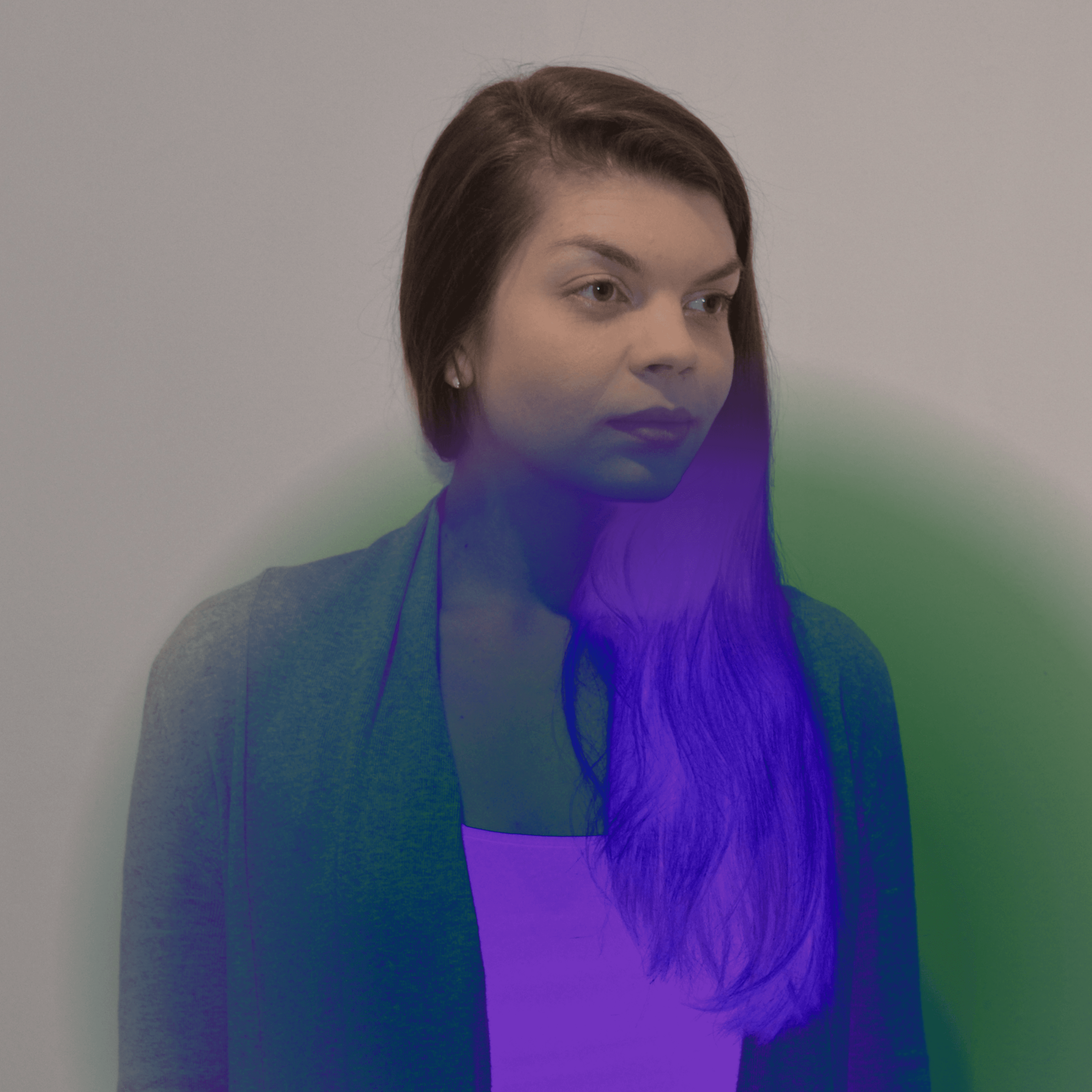
Lívia Nolasco-Rózsás


Lívia Nolasco-Rózsás is a curator, art historian, author, and educator. She has curated exhibitions at institutions of contemporary and media art worldwide since 2006 at institutions such as the ZKM | Center for Art and media Karlsruhe, Nam June Paik Art Center, or Ludwig Museum Budapest, focusing on the genealogy and social impact of planetary computation or electronic surveillance and democracy.  

Between 2019-23 she conducted research in curatorial studies on the “virtual condition” and its implications in the exhibition space at the Academy of Fine Arts Leipzig, and as acting head of the international collaboration project entitled Beyond Matter at ZKM | Karlsruhe, which she initiated and in which institutions such as Aalto University, Centre Pompidou, Paris, EPFL Pavilions, Lausanne, Ludwig Museum Budapest, Tallinn Art Hall, and 

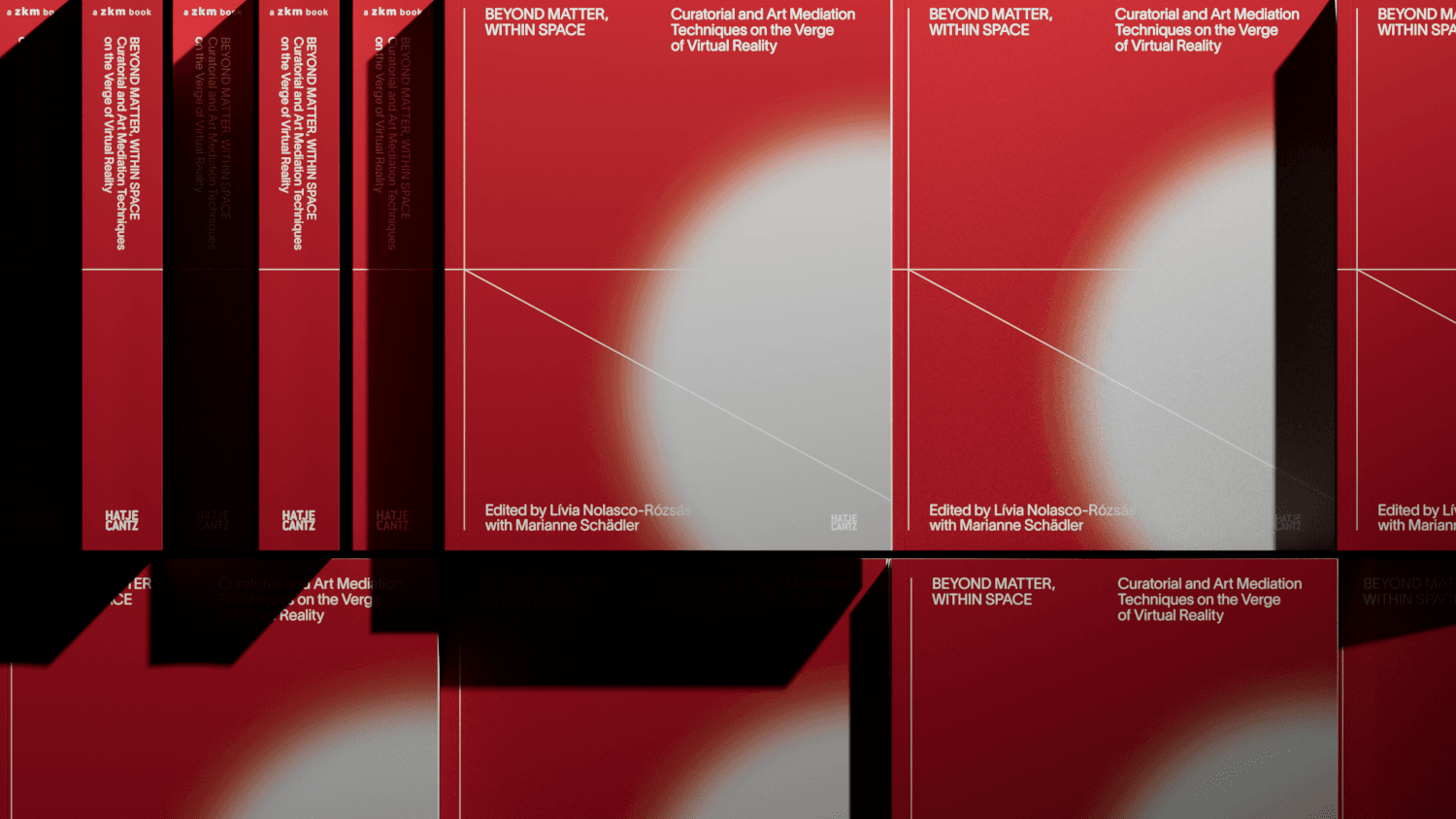
Tirana Art Lab participate. She has recently edited the volume Beyond Matter, Within Space. Curatorial and Art Mediation Techniques on the Verge of Virtual Reality (2023) that summarized the project. 

Nolasco-Rózsás's research interests, rooted in the fields of art history, aesthetics, curatorial studies, and media studies, focus on understanding curating as a process of world-making. The potential afforded by information technology introduces complexities that transform exhibition-making into an act of world-building. Instead of merely representing pre-existing realities, the primary characteristic of this approach is the modeling of possible future scenarios, capable of fostering change.

Currently she serves as a curator for ARE YOU FOR REAL a hybrid platform for transnational dialogue around digital world-making, exploring the influence of science and computation by IFA - Institut für Auslandsbeziehungen and serves as a research fellow at ECAL Lausanne. As of 2023 she has taken up a lecturer role in curation and media practice at University College London. 

Teaching


In the BA Media program, Lívia Nolasco-Rózsás teaches across modules with a focus on experimental media practices. These include early computer art, which evolves into creative AI-based artwork, pioneering video art practices that lead to contemporary video art, and world-building as a method for crafting intricate experimental media projects. Lívia plays a crucial role in overseeing the degree show and external presentations of the students' work.

She gave guest lectures at various universities across the globe, including Yale University, New Haven; Concordia University, Montreal; New York University, Shanghai; Humboldt Universität, Berlin; ITM – Institución Universitaria, Medellín, among others. 


Recent projects: 


Beyond Matter. Cultural Heritage on the Verge of Virtual Reality 

2019-2023


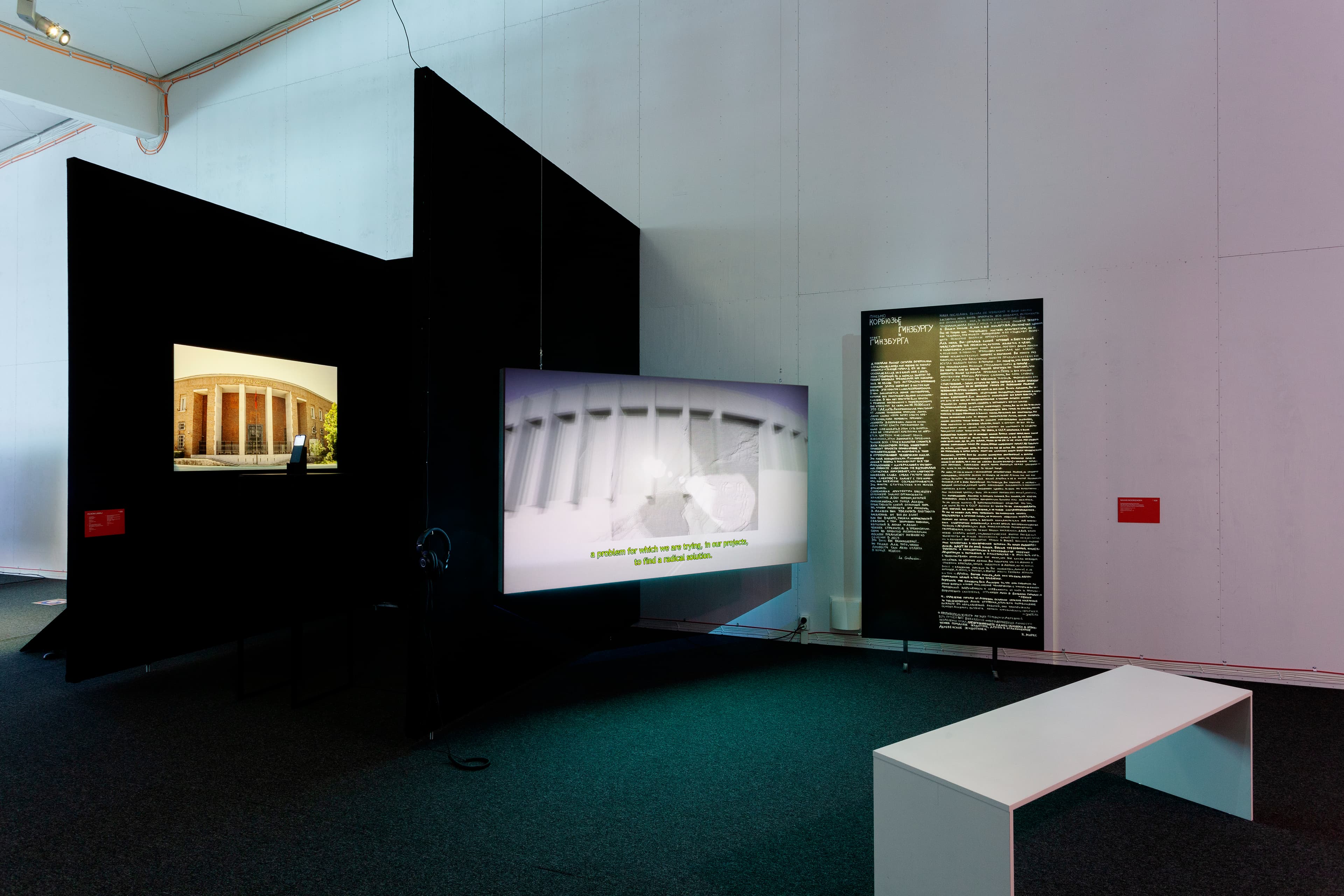
BEYOND MATTER was an international, collaborative, practice-based research project that took cultural heritage and culture in development to the verge of virtual reality. It did this by reflecting on the virtual condition with a specific emphasis on its spatial aspects in art production, curating, and mediation via numerous activities and formats, including the digital revival of selected past landmark exhibitions, art and archival exhibitions, conferences, artist residency programs, an online platform, and publications, from 2019 to 2023.


One of the goals of the project was to develop novel solutions for the accessible digital documentation and networked presentation of exhibitions that currently exist, or previously existed, in physical space – including their artworks, artifacts, and educational materials. In future, these methods of virtualizing exhibitions could be used by museums and galleries to document and revive their exhibitions in new ways. With our experiential, research-based methodology we will provide a basis for developing museological and technological aspects simultaneously.


Exhibition spaces are physical locations of knowledge production and exchange, where spatial qualities play an important role in the contextualization of information. Virtual productions, emulations, and revivals should therefore maintain these qualities, but also be able to include digitized and born-digital content, whether these are artworks, exhibits, or informational materials. This is equally relevant to the reconstruction of spaces that no longer exist.


To ensure that the methods developed remain in use in the longer term, the project contributed to the capacity building of museum professionals through seminars and conferences. The results were collected in the publication “Beyond Matter, Within Space. Curatorial and Art Mediation Techniques on the Verge of Virtual Reality”, and encompass practical and theoretical knowledge on the inclusion of virtual exhibitions in displaying and mediating artworks.


Partner museums and galleries will also host large and small-scale exhibitions to measure and further practice-based innovation, as well as events to disseminate the project’s results. In a framework of artist-in-residence programs, artists are invited to develop new pieces for these exhibitions, ensuring that the project resonates with the latest contemporary trends.


Beyond Matter was led by ZKM|Center for Art and Media Karlsruhe, and the collaborators comprised of researchers and curators at: Aalto University, Espoo; Centre Georges Pompidou, Paris; Ludwig Múzeum–Kortárs Művészeti Múzeum (Ludwig Museum–Museum of Contemporary Art), Budapest; Tallinna Kunstihoone (Tallinn Art Hall); Tirana Art Lab–Center for Contemporary Art; and the associated partners EPFL Pavilions, Lausanne; HAWK–University of Applied Sciences and Arts, Hildesheim, GIM Gesellschaft für Innovative Marktforschung mbH, Heidelberg and Bio Design Lab at the HfG Karlsruhe. These are institutions of varied scales and profiles with a shared interest in the innovative use of digital technologies to reach non-local audiences, to expand their exhibition spaces digitally, and to create hybrid access to the content they wish to mediate. With this project they each tread upon new territory.


Beyond Matter was co-funded by the European Union, the software and hardware development for the museums of the future in the framework of the project is funded by the German Federal Government Commissioner for Culture and the Media.


https://beyondmatter.eu/about

https://withinspace.beyondmatter.eu/


Matter. Non-Matter. Anti-Matter. Past Exhibitions as Digital Experiences 

Exhibition at ZKM | Center for Art and Media Karlsruhe, Sat, December 03, 2022 – Sun, April 23, 2023

Curated by a team led by Lívia Nolasco-Rózsás that is affiliated with two institutions. Members of the curatorial team are Felix Koberstein, Moritz Konrad (ZKM | Karlsruhe) and Marcella Lista, Philippe Bettinelli, and Julie Champion (Centre Pompidou, Paris).

Managing editor: Marianne Schädler


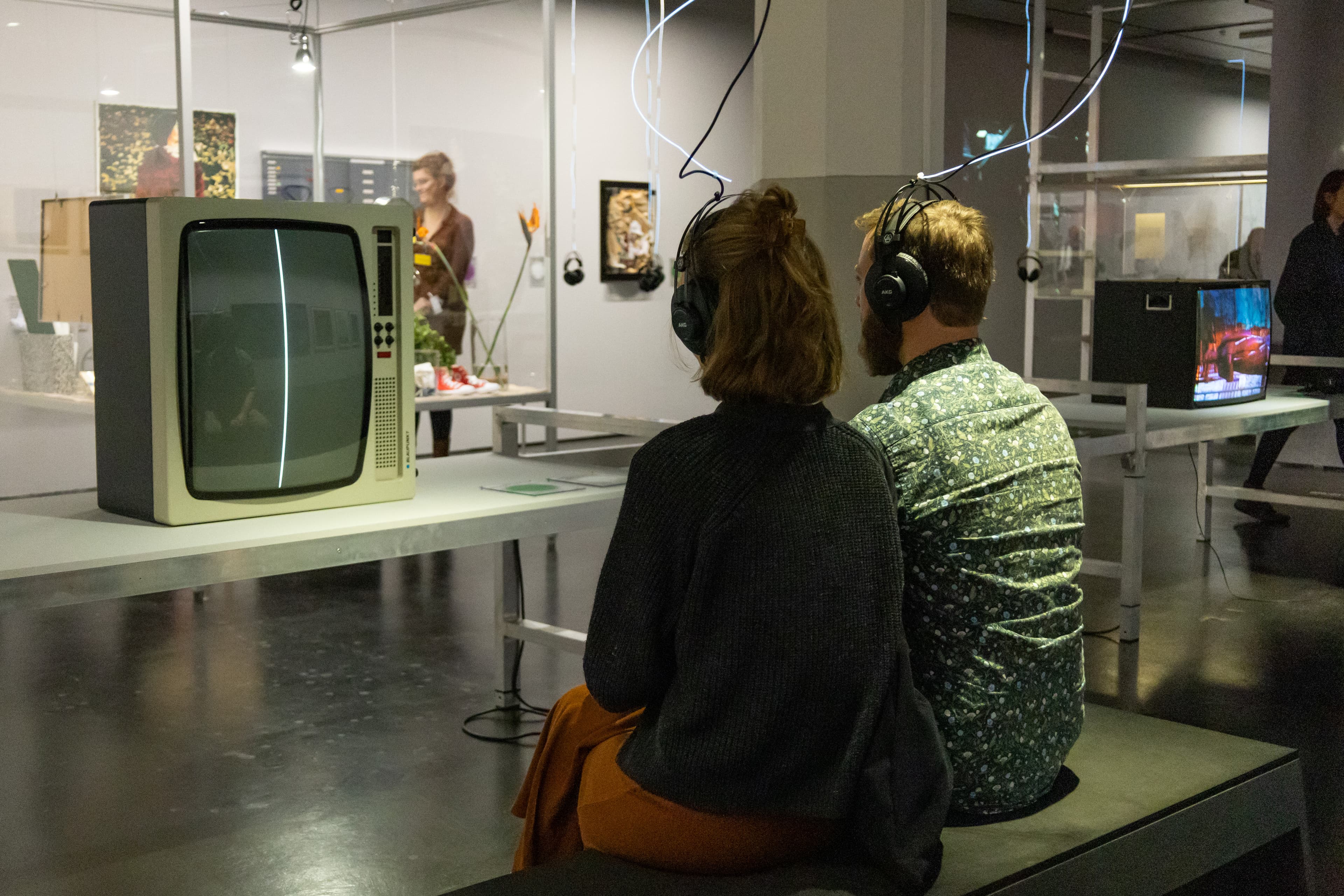
The exhibition took place as part of »Beyond Matter: Cultural Heritage on the Verge of Virtual Reality« beyondmatter.eu (2019-2023). One of the objectives of the collaborative practice-based research project »Beyond Matter« was elaborate on ways to experience past exhibitions using digital modeling methods. The exhibition Matter. Non-Matter. Anti-Matter presented the results of the research at ZKM | Karlsruhe.

At the core of the show is the digital revival of the iconic exhibitions Les Immatériaux of the Centre Pompidou Paris in 1985 and Iconoclash: Beyond the Image Wars in Science, Religion, and Art of the ZKM | Karlsruhe in 2002.

Based on these case studies, ZKM | Karlsruhe and the Centre Pompidou, Paris investigated possibilities of reviving exhibitions through experiential methods of digital modeling. Central to this is also the question of the particular materiality of the digital.

At the heart of the Paris exhibition Les Immatériaux in the mid-1980s was the question of what impact new technologies and materials could have on artistic practice. When philosopher Jean-François Lyotard joined as cocurator, the project's focus eventually shifted to exploring the changes in the postmodern world that were driven by a flood of new technologies.

The exhibition Iconoclash at ZKM | Karlsruhe focused on the theme of representation and its multiple forms of expression, as well as the social turbulence it generates. As emphasized by curators Bruno Latour and Peter Weibel, the exhibition was not intended to be iconoclastic in its approach, but rather to present a synopsis of scholarly exhibits, documents, and artworks about iconoclasms – a thought experiment that took the form of an exhibition – a so-called »thought exhibition« (Gedankenausstellung).

Matter. Non-Matter. Anti-Matter presents in the 21st century the digital models of the two projects on the Immaterial Display: a hardware that has been specially developed for exploring virtual exhibitions. 

On view are artworks and artifacts from the past exhibitions, as well as contemporary reflections created or expanded for this exhibition. These include works by Jeremy Bailey, damjanski, fabric|ch, Geraldine Juárez, Carolyn Kirschner, and Anne Le Troter that echo the 3D models of the two landmark exhibitions. They bear witness to the current digitization trend in the production, collection, and presentation of art.

Case studies and examples of the application of digital curatorial reconstruction techniques that were created as part of the Beyond Matter project complement the presentation.


Links: 

Online booklet to the exhibition: https://beyondmatter.eu/antimatter

Digital model of the exhibition Iconoclash: https://iconoclash.beyondmatter.eu/

Digital model of the exhibition Les Immatériaux: https://lesimmateriaux.beyondmatter.eu/