/ˈfəʊli/ — Foley

Kinetic sound and audiovisual installation, commissioned by Huxley-Parlour.
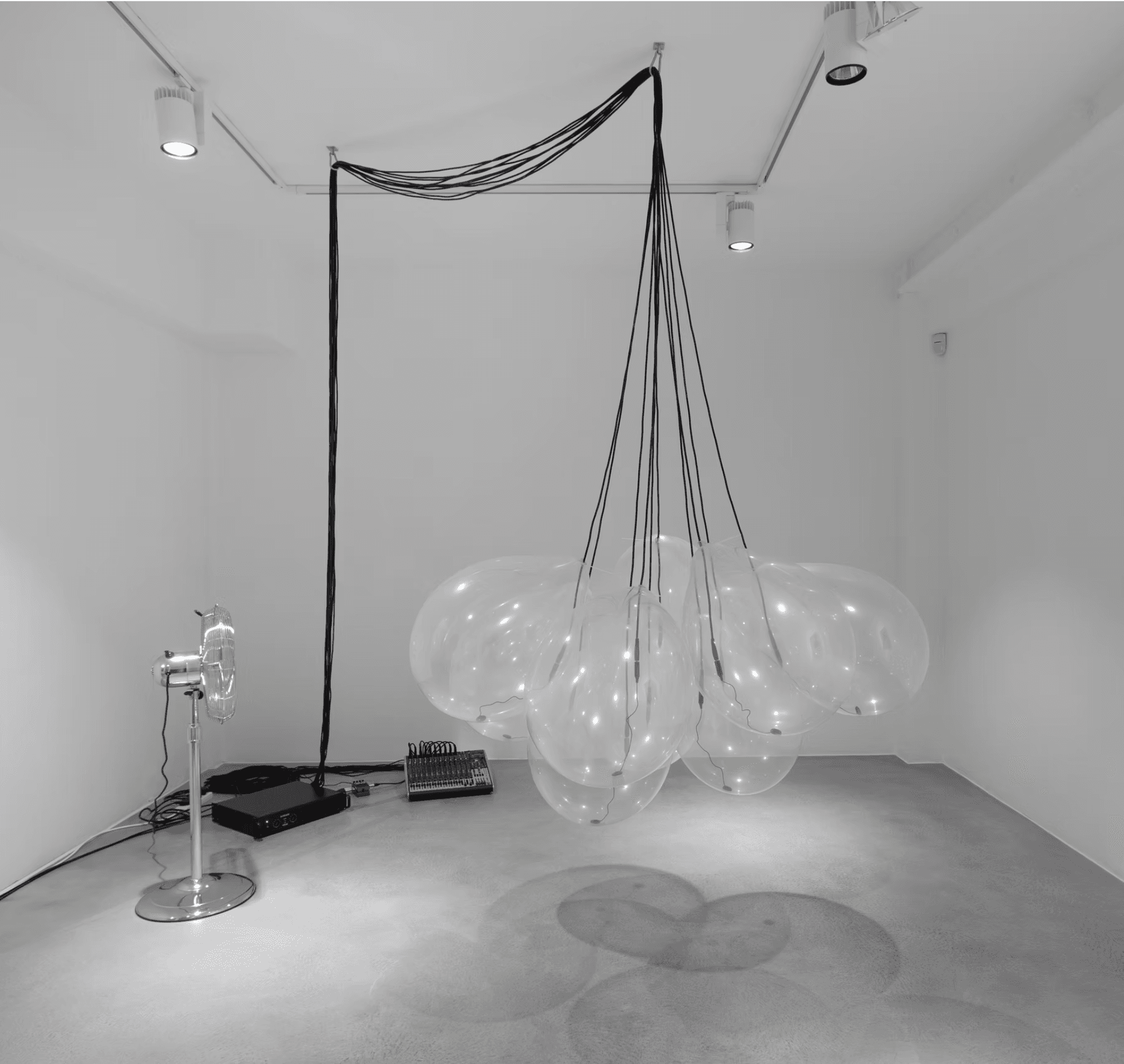
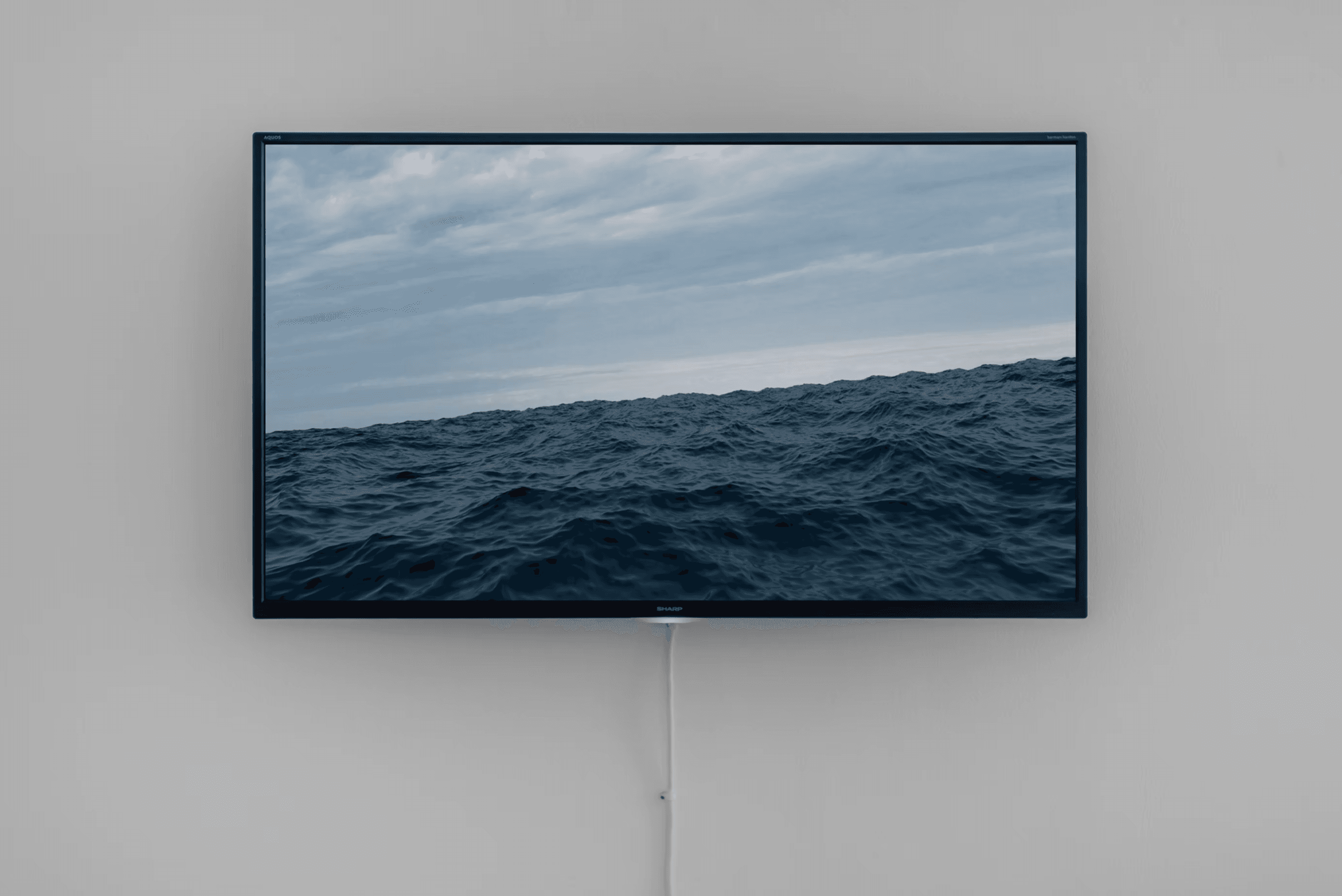
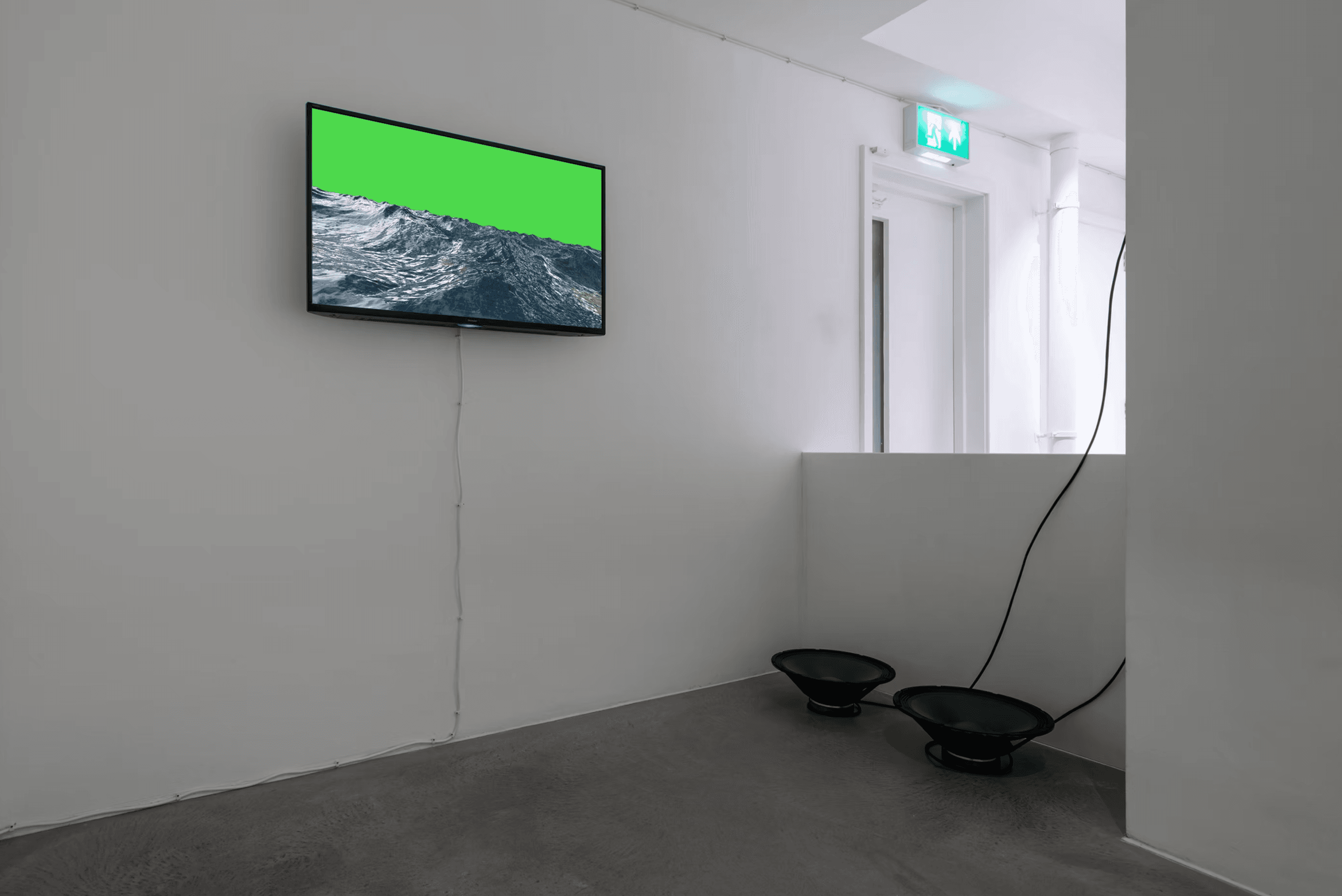
In Foley, Jonas Pequeno transforms ordinary materials into an artificial ocean soundscape. Suspended balloons containing microphones are moved by a fan, causing them to brush and collide. Their vibrations are amplified and digitally processed to produce sounds resembling crashing waves. Presented alongside a computer-generated ocean scene, the installation constructs an apparently natural environment from visibly artificial components.
The title refers to the filmmaking practice of creating sound effects through the manipulation of objects. Pequeno reverses its usual relationship with the audience: rather than concealing the means of production behind a convincing soundtrack, he exposes the balloons, microphones, cables and processing equipment. Visitors encounter both the illusion of the sea and the apparatus responsible for it. The physical arrangement makes the distance between an object and the sound it represents central to the experience.
The work examines how technological processes influence what audiences recognise as real. Its oversized balloons and exposed hardware give sound production a theatrical, sometimes absurd quality, while the accompanying ocean imagery encourages an immersive response. Moving between sculpture, sound and moving image, Foley asks how a convincing sensory experience can emerge from materials that bear little resemblance to the environment they evoke. It was presented at Huxley-Parlour in London in 2020
.png&w=3840&q=75)