Immerse!
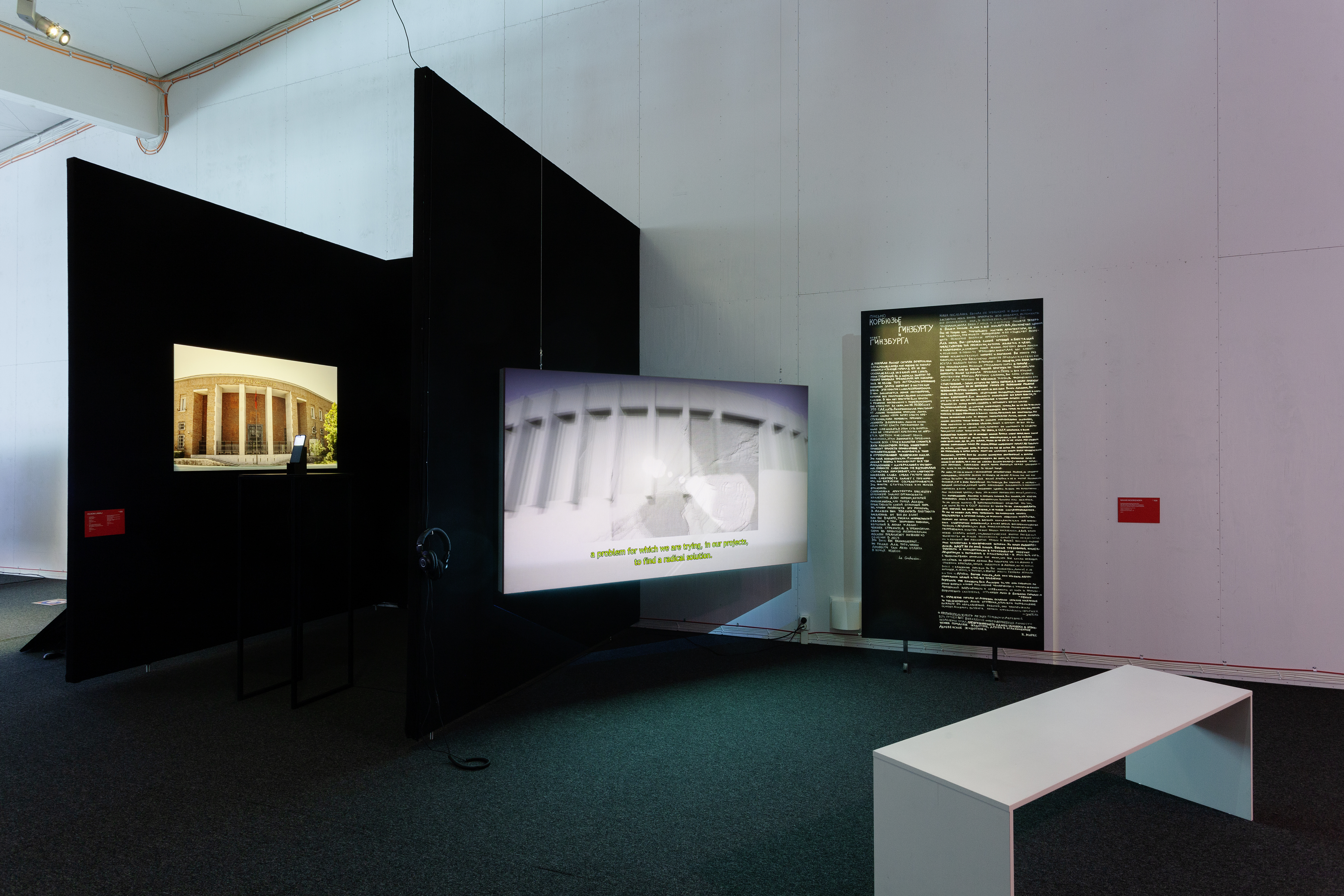
The exhibition Immerse! is realized within the framework of Beyond Matter, an international, collaborative, practice-based research project that brings cultural heritage and culture in development to the verge of virtual reality. This common undertaking seeks to engage with a contemporary shift—largely attributable to the rapid development and ubiquitous presence and use of computation and information technology—in the production and mediation of visual art within institutional frameworks.
The shift is seismic, and it is leading to a condition that may be summarized as “the virtual.” If the postmodern condition was a “crisis of narratives,”[1] as Jean-François Lyotard put it, the virtual condition reflects a crisis of dichotomies. Its analysis suggests that dichotomies are losing their validity: presence and absence, physical and computer-generated, real and simulated. The artificially generated increasingly dominates our reality, intertwines the physical with the virtual, and skews the linearity of time. This has extensive implications for the spatial aspects of curating and mediating visual arts, as well as their reception. The museum transmogrifies into a hybrid entity integrating a geographical location with various digital platforms; instead of one there is an affluence of exhibition spaces, an extended but also porous system of multiple dimensions.
The creation of generative networked spaces to display art and produce knowledge is not a novelty: it has unfolded hand in hand with the development of computation’s ability to visualize simulated or generated spaces that may or may not resemble our observable surroundings and the ways in which we perceive them.
The practice-based research on the virtual condition that the Beyond Matter partner institutions have signed up for manifests as various actions, one of which is the present exhibition. The partners aim to produce knowledge that helps arts practitioners, curators, and museum professionals first understand the shift, and then plan and use best practices and know-how accumulated through our common endeavor. This endeavor has an emphasis on the spatial aspects of art production, curation, and mediation, and includes the digital revival of selected past landmark exhibitions, newly curated art and archival exhibitions, conferences, artist residency programs, an online platform, and publications. These multiple actions are based on but also reflect on the virtual condition.
Immerse! is one of international thematic shows that showcases works of emerging and established contemporary artists engaging with the socio-political or environmental connotations of digital immersion. Many of the contributors participated in the Beyond Matter residency program at the Tallinn Art Hall (Zach Blas, Dennis Dizon, Helen Kaplinsky, Laura Kuusk & Camille Laurelli), Tirana Art Lab (Hanna Hildebrand, Olson Lamaj).
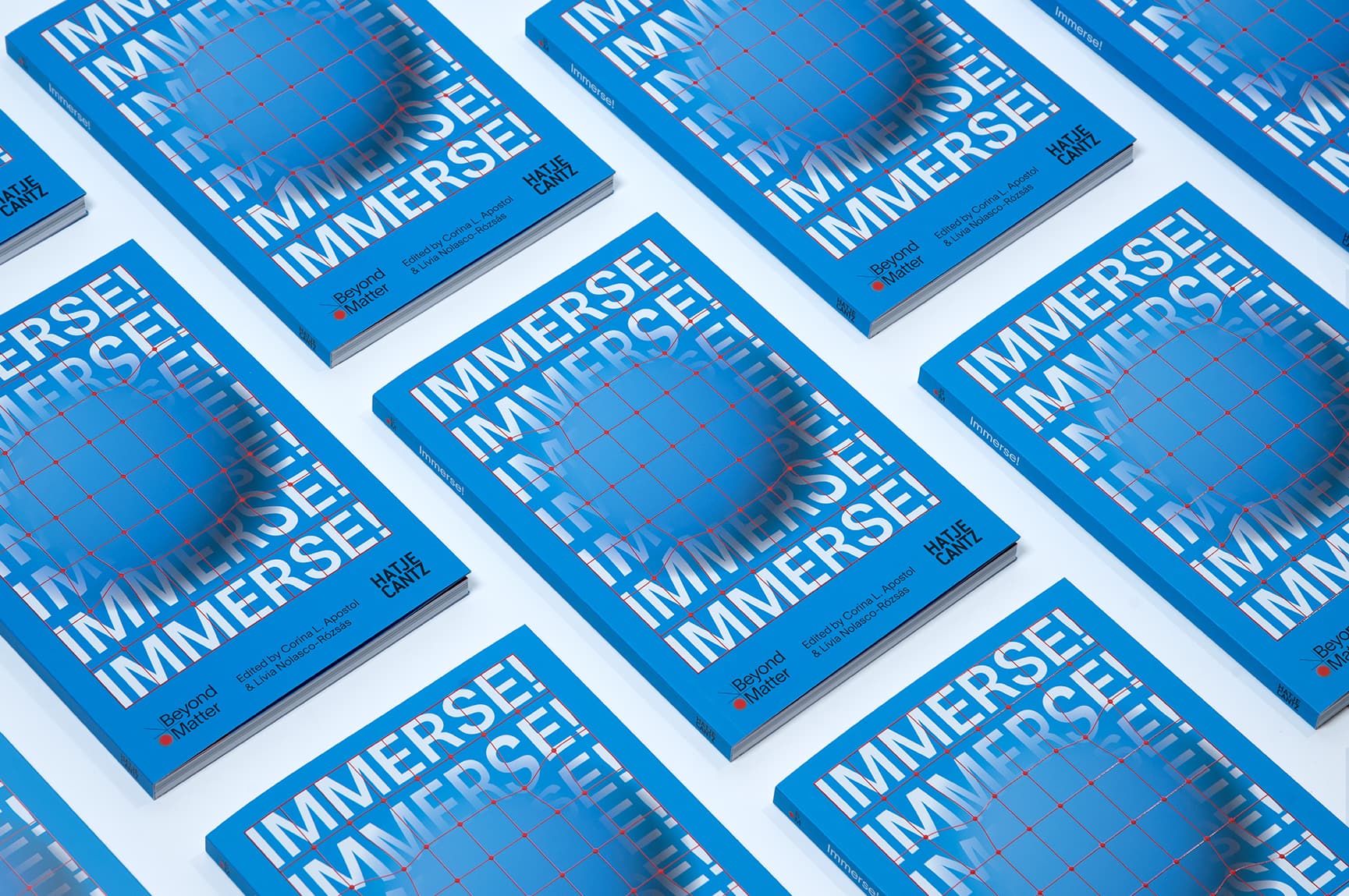
The exhibition is accompanied by a catalog edited by the curators featuring theoretical contributions and essays penned by leading practitioners in the field, as well as visual essays and interviews with artists exhibited in the exhibition and its discursive program. Furthermore, the catalog will include a bibliography, references, and illustrations.
With the recent worldwide acceleration of digitization of the arts during the pandemic and the ensuing crisis, this catalog will serve as a timely resource to reflect on and analyze some of the latest artistic solutions and platforms that enable remote access to knowledge and culture in unique and effective ways. Contributions will simultaneously consider the fragmentation of presence and self, and the dissolution of the individual from the collective that is driven by the proliferation of immersive technologies.
We consider this catalog to be a resource and reference publication for those who are already familiar and actively involved in the field of virtual reality and digital art practices, as well for those art world insiders who would like to engage deeper in-, pursue or support immersive art projects. A more general international audience that this catalog addresses are those who are concerned and impacted by the issues highlighted in the aforementioned, including those who are curious about finding new ways to connect with others.