The Speculative Camera
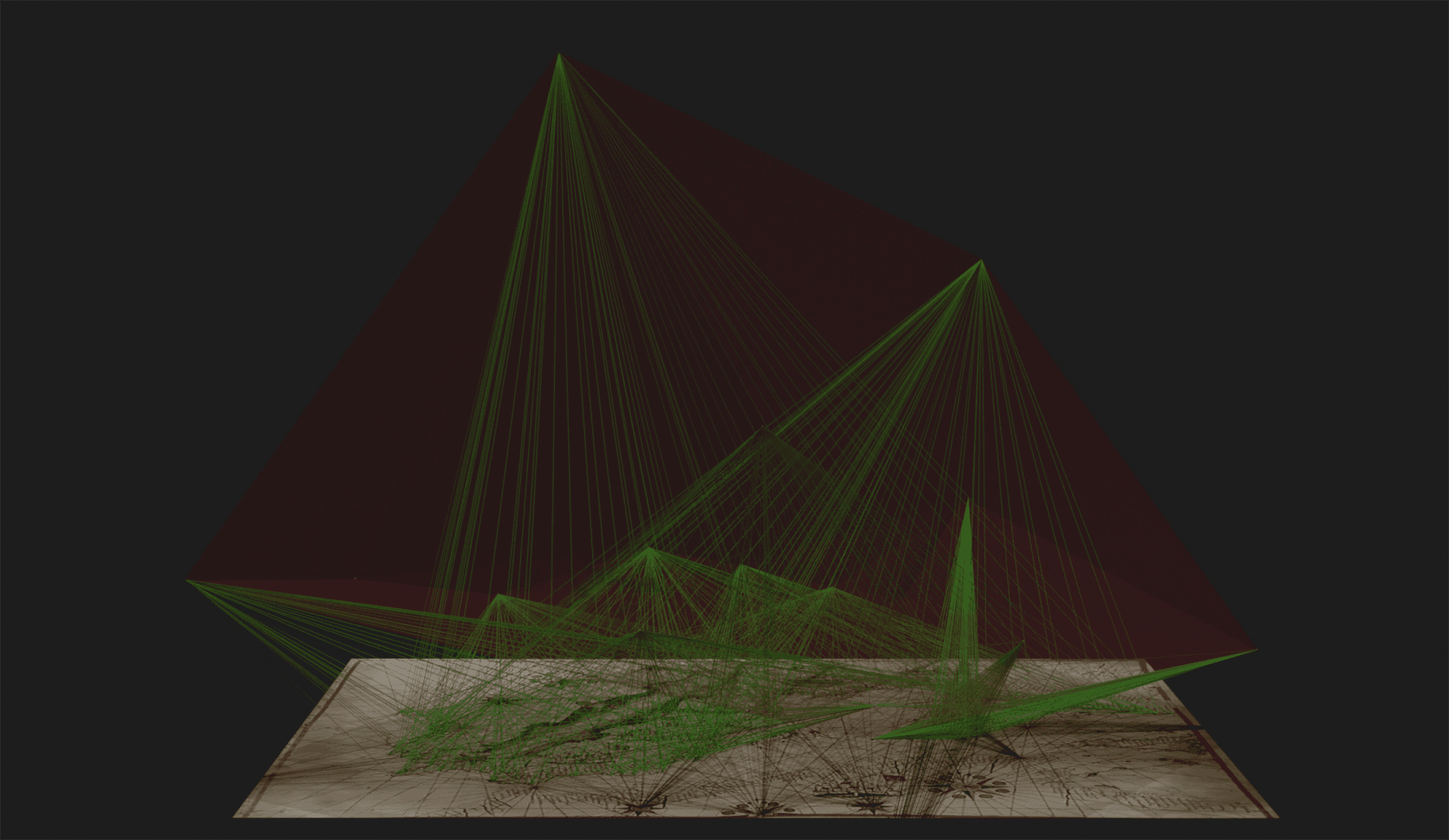
What if we focused on different camera constellations in order to understand the future and history of photographies, instead of focusing on specific (photographic) representations? This turn towards the camera would not only take into account the kinds of devices commonly exhibited and listed as cameras, but would include the alternative forms and methods of measurement and electromagnetic sensing: sentient and nonsentient, historical and contemporary which are involved in developing our techno-visual imaginaries. The speculative camera, as collectively undertaken research, explicitly addresses the camera as an assemblage that includes not only particular photographic devices, but also a range of other techniques, technologies, and ways of being which form a backdrop for photographies. This article presents three cross sections exploring the relationships between photographies and: A. Navigational abilities practised by members of the animal kingdom (notably bat echolocation); B. Human way-finding, seafaring, and astronomy and C. Volumetric mapping (like infrared sensing, LIDAR and Photogrammetry). Common to these is the articulation of temporality as pivotal to camera operations, through observations, time-stamping and time-synchronicity.
This research reframes the study of photography by shifting attention from isolated photographic images to the wider constellations of sensing practices, perceptual strategies, and measurement techniques that make photographic operations possible. It conceptualises the “camera” not as a singular device but as a distributed assemblage incorporating human and nonhuman modes of sensing, historical and contemporary navigational technologies, and computational systems of volumetric and electromagnetic measurement. Through this reconceptualization, the project demonstrates how photographic temporality—via observation, timestamping, and time-synchronisation—emerges across species, technologies, and historical contexts.